A cholesterol blood test gives you several numbers, and most people only look at one. The numbers that matter most are LDL (often called “bad” cholesterol), HDL (“good” cholesterol) and triglycerides, and your GP reads them together with your age, blood pressure, smoking status and family history. High cholesterol usually has no symptoms, which is why a test is the only way to know where you stand.
This guide explains each number, what the common reference ranges mean, what can push cholesterol up and what happens next. It is general information. Your GP sets your personal target based on your heart risk.
What does a cholesterol test measure?
A standard cholesterol blood test, called a lipid profile, usually reports:
| Result | What it measures | Why it matters |
|---|---|---|
| Total cholesterol | All the cholesterol in your blood | A starting point, but not enough on its own |
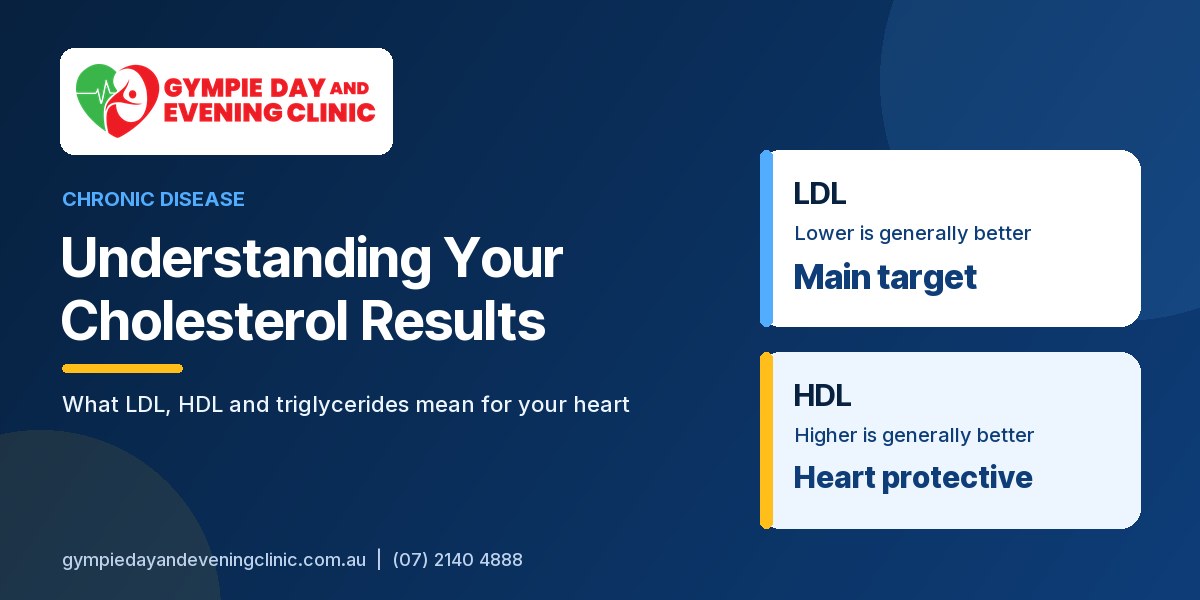
| LDL cholesterol | Cholesterol that can build up in artery walls | Lower is generally better, and LDL is the main target for treatment |
| HDL cholesterol | Cholesterol that helps carry fat away from the arteries | Higher is generally better |
| Triglycerides | Fat carried in the blood, linked to sugar, alcohol and weight | High levels add to heart risk |
| Non-HDL cholesterol | Total cholesterol minus HDL | Useful when triglycerides are high |
HDL vs LDL: what is the difference?
Think of LDL as the cholesterol that can clog arteries, and HDL as the cholesterol that helps clear it. A high LDL raises your risk of heart attack and stroke over time. A high HDL is generally protective, but a very high HDL does not cancel out a high LDL. Your GP looks at the balance and the overall picture.
Reading your results: general reference points
The table below gives general reference points used in Australia. They are a guide only. Targets depend on your heart and health history, so do not change your treatment based on these numbers alone.
| Result | General reference point | What it can mean |
|---|---|---|
| Total cholesterol | Often reviewed when above about 5.5 mmol/L | Needs a risk check with your GP |
| LDL cholesterol | Lower is better. Targets are often lower for people with heart disease or diabetes | Depends on your heart risk |
| HDL cholesterol | About 1.0 mmol/L or higher for men, and 1.3 mmol/L or higher for women | Higher is generally protective |
| Triglycerides (fasting) | Below about 1.7 mmol/L | Above this, your GP may look at sugar, alcohol and weight |
Some labs ask you to fast for 8 to 12 hours before a test, especially if triglycerides are being measured. Ask when you book.
What causes high cholesterol?
- Diet. Lots of saturated fat from fatty meats, full-fat dairy, pastries and fried foods.
- Genetics. Some people inherit a condition called familial hypercholesterolaemia, which raises LDL from a young age.
- Weight. Carrying extra weight, especially around the waist, often raises triglycerides and lowers HDL.
- Inactivity. Regular movement helps raise HDL.
- Smoking and vaping. Both lower HDL and damage artery walls.
- Alcohol. Heavy drinking raises triglycerides.
- Other conditions. Diabetes, an underactive thyroid and kidney disease can raise cholesterol.
- Some medicines. A few medicines can affect cholesterol, so tell your GP about everything you take.
What can you do to improve your numbers?
Lifestyle changes make a real difference for many people:
- Swap saturated fats for unsaturated fats, such as olive oil, nuts, avocado and oily fish.
- Eat more fibre. Oats, legumes, vegetables and fruit help lower LDL.
- Move most days. Aim for 150 minutes of moderate activity a week.
- Stop smoking or vaping. Support is free through Quitline on 13 78 48.
- Keep alcohol low and limit sugary drinks.
- Lose weight if you need to. Even a small loss can improve triglycerides and HDL.
Diabetes and high blood pressure often come with high cholesterol, so read our guides on managing type 2 diabetes and high blood pressure symptoms and causes as well.
When are medicines needed?
Lifestyle changes are the first step for many people. Your GP may recommend cholesterol-lowering medicine, such as a statin, based on your overall heart risk, not only on one number. Medicines are most useful when your risk is higher. Do not stop a prescribed medicine without talking to your GP first.
Your GP may use a cardiovascular risk assessment, which combines your age, blood pressure, cholesterol, smoking status, diabetes and family history to estimate your risk over the next five years.
When should you see a GP?
Book an appointment:
- if you have not had your cholesterol checked in the last few years, or your results are not clear
- if your family has a history of heart disease at a young age, or high cholesterol
- if you have diabetes, high blood pressure, or a smoking habit
- if you have chest pain, pain in the arm or jaw, or shortness of breath on activity
Call 000 for chest pain, pain spreading to the arm or jaw, sweating or fainting, or severe breathlessness. These can be signs of a heart attack.
Cholesterol checks at Gympie Day and Evening Clinic
Our GPs review cholesterol results, calculate heart risk and talk through lifestyle changes and treatment options. The clinic has on-site pathology collection, so blood tests can often be taken during the same visit. Appointments run on weekday evenings until 9 pm and on weekends. Learn more about our chronic disease management service or book an appointment online.
Frequently asked questions
Sometimes. Fasting is often requested when triglycerides are being measured. Ask when you book.
There is no single number. Your GP looks at LDL, HDL, triglycerides and your overall heart risk.
Yes. High cholesterol usually causes no symptoms, so a blood test is the only way to know.
It depends on your age and risk. Your GP will tell you how often you need a check.
For some people, yes. For others, medicine is also needed. Your GP can help you decide.
Sources: Heart Foundation, Healthdirect, Quitline, Australian Government Department of Health