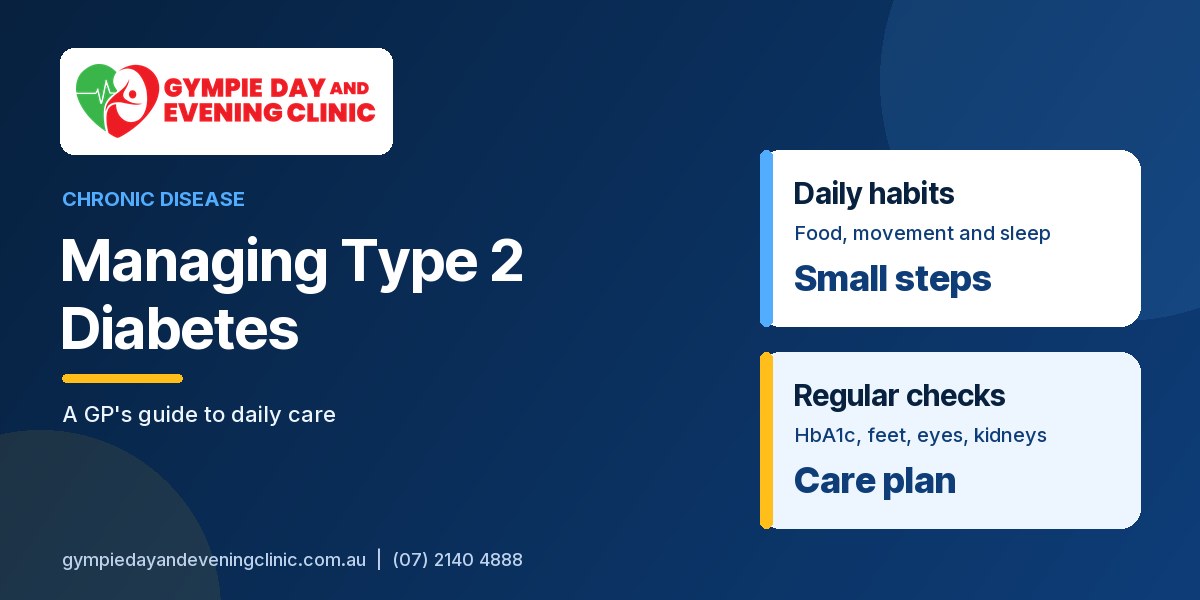
Managing type 2 diabetes comes down to a few daily habits and regular checks: eating well, moving most days, taking your medicines as prescribed, checking your blood sugar if your GP recommends it, and seeing your GP for reviews. Small, steady changes make a big difference. Keeping your blood sugar, blood pressure and cholesterol in range lowers your risk of heart, kidney, eye and foot problems.
Our GPs support patients with chronic disease management in Gympie, including care plans and referrals to allied health. This guide covers what you can do each day and what your GP checks over the year.
What is type 2 diabetes?
Type 2 diabetes is a long-term condition where the body does not use insulin well and cannot keep blood sugar (glucose) in a healthy range. It is the most common type of diabetes, making up about 85 to 90% of all cases in Australia. It usually develops slowly, and many people have it for years before it is found.
Type 2 diabetes cannot be cured, but it can be managed well. For some people, weight loss and lifestyle changes can bring blood sugar back to a normal range.
Type 2 diabetes diet: what to eat
There is no single diabetes diet. The Australian Dietary Guidelines suit most people with type 2 diabetes. Practical steps include:
- Fill half your plate with vegetables or salad, a quarter with lean protein and a quarter with carbohydrate foods.
- Choose high-fibre carbohydrates, such as wholegrain bread, oats, brown rice, legumes and fruit, and keep portions steady across the day.
- Cut back on sugary drinks, juice, lollies, cakes and white bread, which raise blood sugar quickly.
- Choose healthy fats, such as olive oil, nuts, avocado and fish, and limit fried and processed foods.
- Limit alcohol, and if you drink, have it with food.
A dietitian can build a plan around the foods you enjoy. If you are overweight, losing 5 to 10% of your body weight can improve blood sugar control.
Blood sugar control: movement, medicines and monitoring
Move most days
Aim for at least 150 minutes of moderate activity a week, such as brisk walking, swimming or cycling, plus muscle-strengthening exercise on two days. Even a 10 to 15 minute walk after meals helps lower blood sugar.
Take medicines as prescribed
Many people need medicine to keep blood sugar in range. Metformin is often the first medicine used, and others can be added over time. Do not stop or change medicines without talking to your GP, and tell them about side effects.
Check your blood sugar if advised
Not everyone needs to test at home. Your GP will tell you whether you should, how often and what your target range is. If you take insulin or certain tablets, learn the signs of low blood sugar (a “hypo”), such as shaking, sweating, confusion and hunger, and how to treat it.
Look after your feet
Check your feet every day for cuts, blisters or colour changes, wear well-fitting shoes, and see your GP early about any sore that is slow to heal.
The checks your GP does each year
| Check | How often |
|---|---|
| HbA1c (average blood sugar over about 3 months) | Every 3 to 6 months |
| Blood pressure | Every visit |
| Weight and waist | Every visit or as agreed |
| Cholesterol | At least once a year |
| Kidney tests (blood and urine) | At least once a year |
| Foot check | At least once a year, more often if at risk |
| Eye check | Every 1 to 2 years |
Your HbA1c target is set with your GP. For many adults it is 7% (53 mmol/mol) or less. Diabetes often comes with high blood pressure and cholesterol, which is why a regular men’s health check or women’s health review also looks at these.
How a diabetes GP care plan helps
A Medicare-funded care plan sets out your goals and the team who will help you. It can give you Medicare rebates for up to 5 allied health visits a year, such as a dietitian, diabetes educator, podiatrist or exercise physiologist. Your GP reviews the plan with you regularly.
Free and low-cost support
- NDSS: registering with the National Diabetes Services Scheme is free and gives you access to subsidised supplies, such as blood glucose test strips and pen needles, as well as education programs. Our on-site pharmacy supplies NDSS products.
- Diabetes Australia has free information and support programs.
Sick days and when to get help
Illness can push blood sugar up or down. Keep drinking fluids, keep taking your medicines unless your GP has told you otherwise, and check your blood sugar more often if you test at home. Ask your GP for a sick day plan.
Call 000 for chest pain, signs of a stroke, or if someone with diabetes is very drowsy, confused or cannot keep fluids down.
Diabetes care at Gympie Day and Evening Clinic
Our GPs offer care plans, regular reviews and on-site pathology for blood tests, with appointments on weekday evenings until 9 pm and on weekends. Find out more about our chronic disease management service or book an appointment online.
Frequently asked questions
Combine healthy eating, regular physical activity, medicines if needed, and regular GP checks of your HbA1c, blood pressure, cholesterol, kidneys, feet and eyes.
Limit sugary drinks, lollies, cakes, white bread, fried and processed foods. You do not need to cut out carbohydrates; choose high-fibre options and watch portion sizes.
Usually every 3 to 6 months. It may be checked more often after a change in treatment and less often when it is stable.
Some people can bring their blood sugar back into the normal range with weight loss and lifestyle changes. Regular checks are still needed, as it can come back.
It depends on the clinic and your eligibility. At our clinic, standard GP consultations for chronic disease management are bulk billed for eligible Medicare card holders.
Sources: Diabetes Australia, RACGP type 2 diabetes handbook, National Diabetes Services Scheme, Australian Dietary Guidelines, Healthdirect