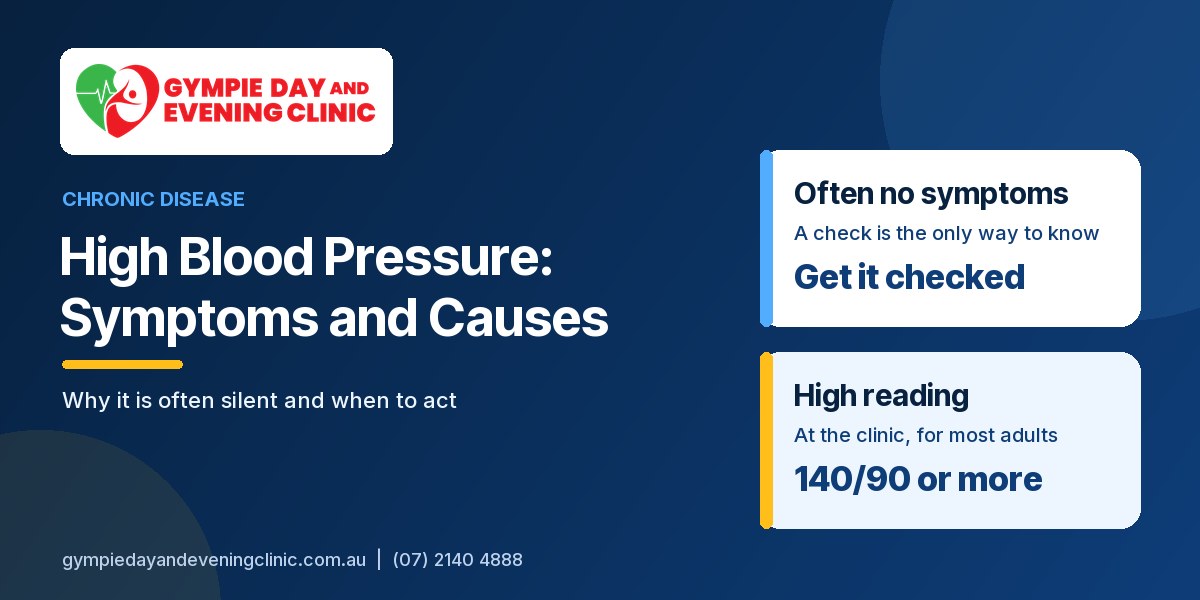
Most people with high blood pressure have no symptoms at all, which is why it is often called a silent condition. The only way to know your numbers is to have your blood pressure checked. Very high blood pressure can cause headaches, blurred vision, chest pain or shortness of breath, and these need urgent care. Left untreated, high blood pressure raises the risk of heart attack, stroke and kidney disease.
Our GPs help patients check and manage blood pressure as part of chronic disease management in Gympie. This guide explains the symptoms, common causes, the risks of hypertension and practical ways to lower your numbers.
What is high blood pressure?
Blood pressure is the force of blood pushing against the walls of your arteries. It is written as two numbers, such as 120/80:
- systolic (top number): the pressure when your heart beats
- diastolic (bottom number): the pressure when your heart rests between beats
High blood pressure, also called hypertension, means the pressure stays high over time. It affects about 1 in 3 Australian adults, and many do not know they have it.
Blood pressure ranges for adults
| Category | Reading (mmHg) |
|---|---|
| Optimal | Below 120/80 |
| Normal | 120 to 129 / 80 to 84 |
| High-normal | 130 to 139 / 85 to 89 |
| High (grade 1) | 140 to 159 / 90 to 99 |
| High (grade 2) | 160 to 179 / 100 to 109 |
| High (grade 3) | 180/110 or higher |
One high reading does not always mean you have high blood pressure. Your GP will usually confirm it with repeat readings, home monitoring or a 24-hour monitor. At home, an average of 135/85 or higher is considered high.
High blood pressure symptoms
Most of the time there are none. When blood pressure is very high, some people notice:
- headaches, often at the back of the head
- blurred or changed vision
- dizziness
- nosebleeds
- a pounding feeling in the chest or neck
- shortness of breath
Call 000 if you have chest pain, sudden weakness or numbness, trouble speaking, a severe headache or confusion. These can be signs of a heart attack or stroke.
Causes of high blood pressure
High blood pressure usually develops over years. Common causes and risk factors include:
- getting older, as arteries become stiffer
- family history of high blood pressure or heart disease
- too much salt, often from processed and takeaway food
- being overweight, especially around the waist
- low physical activity
- alcohol, especially more than 10 standard drinks a week
- smoking
- stress and poor sleep, including sleep apnoea
- other conditions, such as kidney disease, diabetes or thyroid problems
- some medicines, such as anti-inflammatory pain relievers, decongestants and some contraceptive pills
Hypertension risks: why it matters
Over time, high blood pressure damages blood vessels and makes the heart work harder. This raises the risk of:
- heart attack and heart failure
- stroke
- kidney disease
- eye damage
- dementia
The risk is higher when high blood pressure comes with diabetes, high cholesterol or smoking. Read more about managing type 2 diabetes, which often goes hand in hand with high blood pressure.
Lowering blood pressure: what helps
Lifestyle changes
- Eat less salt. Aim for less than 5 g of salt (about one teaspoon) a day. Check food labels and cook more at home.
- Eat more vegetables, fruit, wholegrains and legumes.
- Move most days. Aim for 150 to 300 minutes of moderate activity a week, such as brisk walking.
- Limit alcohol to no more than 10 standard drinks a week and no more than 4 on any one day.
- Stop smoking. Your GP can help with a quit plan.
- Lose weight if you need to. Even a few kilograms can lower blood pressure.
- Sleep well and see your GP if you snore heavily or feel tired during the day.
Medicines
Many people also need medicine to reach a healthy level. Your GP will choose one based on your age, other conditions and side effects. Blood pressure medicines usually need to be taken long term, so do not stop them without talking to your GP.
How often should you check your blood pressure?
- Adults 18 and over: at least every 2 years
- Adults 45 and over, or with risk factors: at least once a year, as part of a heart health check
- If you have high blood pressure: as often as your GP advises, often with home readings
Blood pressure is also checked at a men’s health check and many other GP visits. Our on-site pharmacy also offers blood pressure checks.
Blood pressure care at Gympie Day and Evening Clinic
Our GPs check blood pressure, arrange tests to look for causes, and set up a plan to bring your numbers down. Appointments run on weekday evenings until 9 pm and on weekends. Learn more about our chronic disease management service or book an appointment online.
Frequently asked questions
Usually there are none. That is why regular checks matter. Very high blood pressure can cause headaches, blurred vision, dizziness or nosebleeds.
A reading of 140/90 or higher at the clinic, or an average of 135/85 or higher at home, is considered high. A reading of 180/110 or higher needs prompt medical attention.
It usually cannot be cured, but it can be well controlled with lifestyle changes and, if needed, medicine. Some people can lower it enough with lifestyle changes alone.
Stress can raise blood pressure for a short time. Long-term stress can add to high blood pressure, especially if it affects sleep, diet, alcohol use or activity.
There is no safe quick fix. Cutting salt, moving more, limiting alcohol and taking prescribed medicine regularly lower blood pressure over weeks. Seek urgent care for a very high reading with symptoms.
Sources: Heart Foundation, Healthdirect, NHMRC alcohol guidelines, Eat for Health