
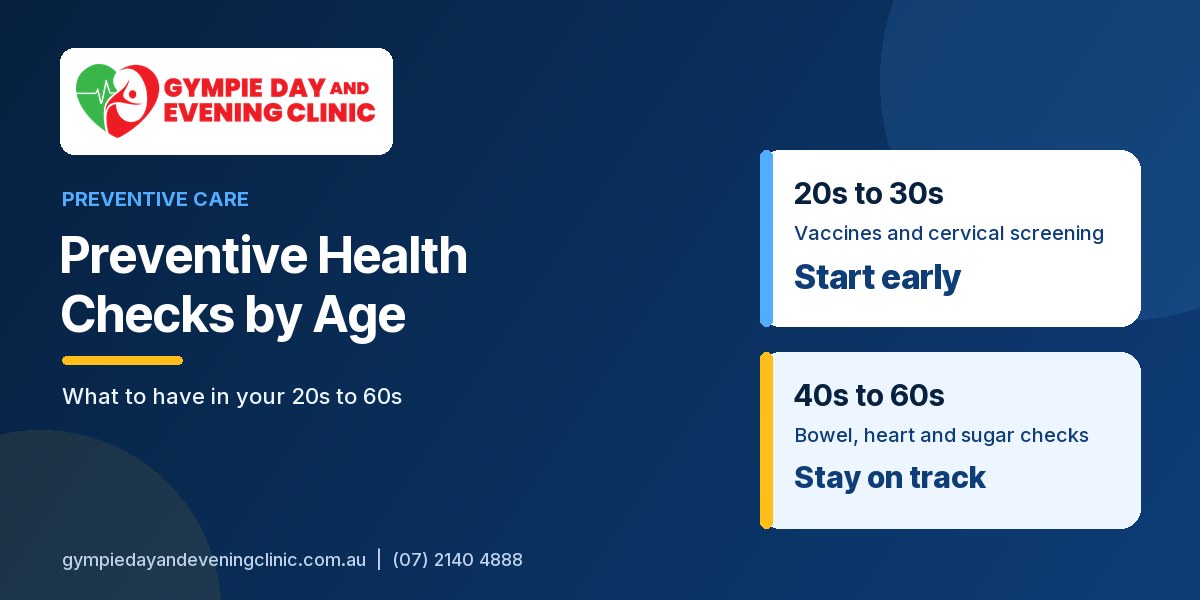
Preventive health care is about finding problems early, while they are easy to treat, and keeping you well as you age. The checks you need depend on your age, sex, family history and lifestyle. Some checks are routine across all adults, while others start at a set age or only apply if you have a higher risk.
This guide goes decade by decade, shows what is usually recommended and explains when to ask your GP. It is general information. Your GP will tailor the plan to you, and you can book a longer review through our family medicine services in Gympie.
Your 20s
Most people in their 20s do not need a large set of tests. Focus on the basics:
- Vaccinations. Check your vaccines are up to date, including tetanus and any travel or work-related vaccines.
- Cervical screening. Screening starts at 25 for people with a cervix, and is done every 5 years. Read our guide to cervical screening.
- Blood pressure and weight. A quick check at a routine visit is useful, especially if you have a family history of heart disease.
- Mental health. Talk to your GP if stress, anxiety or low mood is affecting your daily life.
Your 30s
Checks in your 30s are about lifestyle and habits:
- Blood pressure and cholesterol. Your GP can check these at a routine visit and assess your heart risk.
- Blood sugar. Ask about diabetes risk if you have a family history, carry extra weight or have gestational diabetes.
- Cervical screening. Continue every 5 years, if you have a cervix.
- Skin. Check your skin for new or changing spots. Those with many moles or a history of sunburn should discuss skin checks.
Your 40s
Health risks start to rise in your 40s, so checks become more important:
- Heart and cholesterol. Regular blood pressure and cholesterol checks, with a heart risk review if you have risk factors.
- Blood sugar. A check for type 2 diabetes is worth discussing, especially with a family history.
- Skin. Read our guide on how often you should get a skin check.
- Bowel screening. The free bowel screening test starts at 45. You can learn more about bowel cancer risk and screening.
- Men aged 45 to 49. A once-only Medicare health assessment is available for men at risk of chronic disease. Read our men’s health check guide.
Your 50s
Screening becomes more important as your risk increases:
- Bowel screening. Every 2 years, with a free kit from the national program.
- Cervical screening. Every 5 years, until age 74.
- Prostate health. Talk with your GP about the benefits and limits of a PSA test. This is usually from age 50, or from 40 to 45 with a family history. Read our guide to prostate health for men over 50.
- Heart, cholesterol and blood sugar. Checks may be more frequent if you have risk factors.
- Eyes and hearing. Regular eye checks help detect problems such as glaucoma, and hearing checks help if you notice changes.
Your 60s and beyond
Keep up your checks and watch for changes in how you feel:
- Bone health. Women should discuss bone density scans around menopause or if they have risk factors.
- Bowel screening. Continue every 2 years until age 74.
- Vaccines. Ask your GP about flu and shingles vaccines.
- Regular review. Discuss blood pressure, cholesterol, blood sugar and medicines at your yearly visit.
Checks for everyone, at any age
| Check | Who it is for | How often |
|---|---|---|
| Blood pressure | All adults | At routine visits, more often if risk is raised |
| Cholesterol | Adults with heart risk factors, or as advised | Based on your GP’s assessment |
| Blood sugar | Adults with diabetes risk | Based on your GP’s assessment |
| Skin check | Adults with many moles, a sun-damaged history or a family history | Based on risk |
| Bowel screening test | Ages 45 to 74 | Every 2 years |
| Cervical screening | Ages 25 to 74, with a cervix | Every 5 years |
Your GP will decide what you need based on your health history, so use this table as a starting point rather than a fixed schedule.
When should you see a GP?
Book an appointment if:
- you have not had a routine check for a few years
- you have a family history of heart disease, diabetes, bowel cancer or other cancers
- you are over 45 and want a preventive review
- you notice changes in your health, such as weight loss, fatigue or new symptoms
Preventive care at Gympie Day and Evening Clinic
Our GPs talk through your age, history and goals, and then put together a preventive plan. Appointments run on weekday evenings until 9 pm and on weekends, so a longer check can fit around work. You can book an appointment online or find out more about family medicine.
Frequently asked questions
Vaccinations, cervical screening from age 25 if you have a cervix, and a routine blood pressure and weight check.
The free national bowel screening test starts at age 45 and goes to age 74, with a kit every 2 years.
Yes. A once-only Medicare health assessment is available for men aged 45 to 49 who are at risk of chronic disease. Your GP decides if you qualify.
Every 5 years, from age 25 to 74, if you have a cervix.
Not automatically. Talk with your GP about the benefits and limits of a PSA test, usually from age 50, or earlier with a family history.
Sources: Australian Government Department of Health, Services Australia, Cancer Council Australia, Heart Foundation
This article is general information only and does not replace advice from your doctor. Speak to your GP about the checks that suit you.