
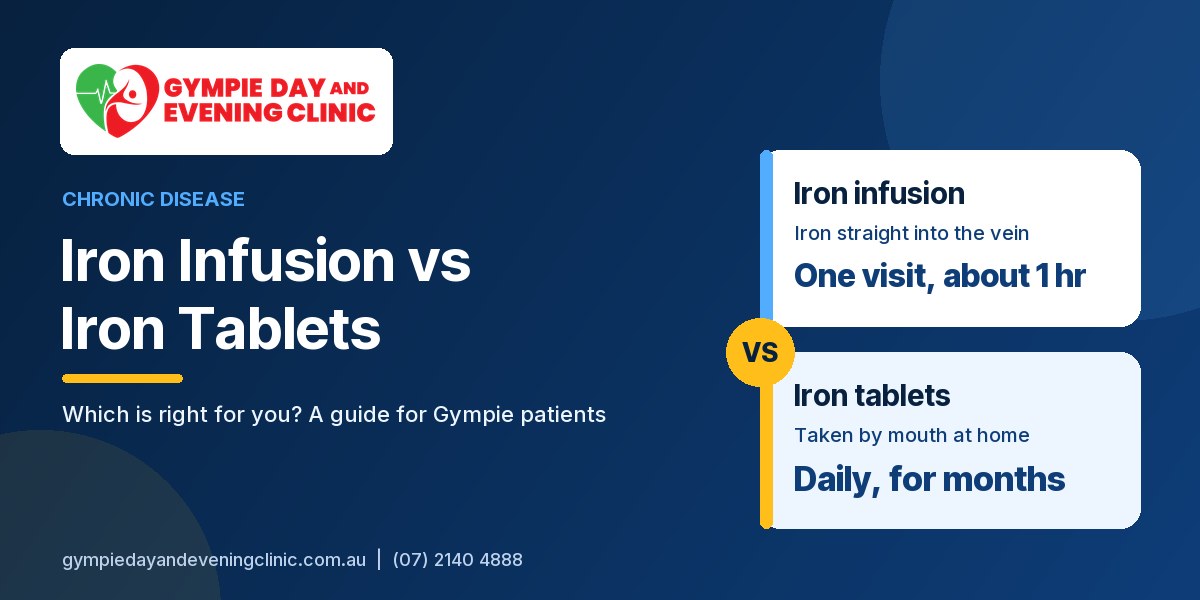
Most people with low iron start with iron tablets. They are cheap, taken at home and work well for many people, but they can take a few months to refill your iron stores. An iron infusion puts iron straight into a vein in one visit and raises iron levels faster. It is usually used when tablets have not worked, cause side effects, or when iron is needed quickly.
Your GP will help you choose based on your blood test results, the cause of your low iron and how you are feeling. At our clinic we offer iron infusions in Gympie for patients who need them. This guide compares the two treatments, the benefits and side effects of each, and what to ask your GP.
What is the difference between an iron infusion and iron tablets?
| Iron tablets | Iron infusion | |
|---|---|---|
| How it is given | Swallowed at home | Through a drip into a vein at the clinic |
| How long treatment takes | Usually daily for about 3 months or more | Usually one visit of about 45 to 60 minutes, sometimes two |
| How fast it works | Iron levels rise slowly over weeks to months | Iron levels rise faster, often within a few weeks |
| Common side effects | Constipation, nausea, stomach pain, dark stools | Headache, flushing or flu-like aches for a day or two |
| Serious risks | Very rare | Rare allergic reaction, skin staining if iron leaks under the skin |
| Usually used for | Most people with mild to moderate low iron | People who cannot take tablets, tablets have not worked, or iron is needed quickly |
How iron tablets work
Iron tablets and liquids are absorbed through your gut. The body can only take in a small amount at a time, so treatment is slow. Your GP will usually suggest you keep taking them for about three months after your levels return to normal, so your iron stores fill up again.
To help your body absorb the iron:
- take the tablet on an empty stomach, or with a small snack if it upsets you
- take it with water or a drink with vitamin C, such as orange juice
- avoid tea, coffee, milk, calcium tablets and antacids for one to two hours either side of your dose
- follow your GP’s advice on how often to take it. Some doctors suggest every second day, which may help absorption and cause fewer side effects
Iron tablets side effects
Side effects are the main reason people stop iron tablets. The most common ones are:
- constipation or diarrhoea
- nausea and stomach cramps
- dark or black stools, which are harmless
Taking a lower dose, taking it every second day, or changing the brand can help. If you still cannot take them, tell your GP. Do not stop treatment without talking to them first.
Iron infusion benefits
An iron infusion gives a full dose of iron straight into your bloodstream, so it skips the gut. The main benefits are:
- Speed. Iron levels rise faster than with tablets, which helps if you are very tired or need iron before surgery or late in pregnancy.
- One or two visits. Most people need one infusion rather than months of daily tablets.
- No stomach side effects. It suits people who cannot absorb iron well from the gut, for example people with coeliac disease or inflammatory bowel disease.
Iron infusion risks
Iron infusions are generally safe, and you are watched during and after the drip. Possible side effects include:
- headache, flushing, a metallic taste or flu-like aches for a day or two
- skin staining. If iron leaks out of the vein into the skin, it can leave a brown mark that may be permanent. Tell the nurse straight away if the drip site stings, swells or changes colour.
- low phosphate levels in the blood with some types of iron, which your GP may check with a blood test
- a serious allergic reaction, which is rare
The Therapeutic Goods Administration (TGA) has published safety information about skin staining with iron infusions, so ask your GP about it before your appointment.
Who might need an iron infusion?
Your GP may suggest an infusion if you:
- have tried iron tablets and they have not raised your iron enough
- cannot take tablets because of side effects
- have a condition that affects iron absorption, such as coeliac disease or inflammatory bowel disease
- have heavy periods that keep draining your iron
- are pregnant (usually after the first trimester) and need iron quickly
- need your iron levels up before surgery
- have chronic kidney disease or heart failure with low iron
Treating low iron starts with finding the cause
Iron treatment fixes the shortfall, but your GP will also look for the reason your iron is low. Common causes include:
- heavy periods (see our women’s health care)
- pregnancy and breastfeeding
- not enough iron in the diet, especially with vegetarian or vegan eating
- regular blood donation
- blood loss from the gut, which needs checking, particularly in men and in women after menopause
Low iron without a clear cause should always be followed up with your GP.
Iron infusions at Gympie Day and Evening Clinic
Here is how it works at our clinic:
- See a GP. Your GP reviews your symptoms and blood tests, including ferritin and haemoglobin, and looks for the cause of your low iron.
- Get the medicine. If an infusion is right for you, your GP writes a prescription for Ferinject or Monofer. You buy it from a pharmacy, at the PBS price if you are eligible, and bring it to your appointment.
- Have the infusion. Allow 45 to 60 minutes. You can eat and drink normally beforehand. Wear a top with loose sleeves.
- Follow up. A blood test 4 to 8 weeks later shows how well the treatment has worked.
Fees depend on your appointment and the medicine. Read how GP billing and Medicare rebates work, then call us on (07) 2140 4888 for current fees. You can book an appointment online to talk about your iron levels with one of our GPs.
Frequently asked questions
Most people start to feel less tired within one to three weeks. A blood test 4 to 8 weeks after the infusion shows how much your iron has improved.
Haemoglobin often starts to rise within a few weeks, but it usually takes about three months or more of regular tablets to refill your iron stores.
Not for everyone. Tablets work well for many people and are the usual first step. An infusion is better when tablets do not work, cause side effects, or when iron is needed quickly.
Most people can drive home and return to normal activities on the same day. Your GP will tell you if you need to wait longer.
Yes. A recent blood test confirms that your iron is low and helps your GP work out the right dose.
Sources: Healthdirect, Therapeutic Goods Administration, Australian Red Cross Lifeblood
This article is general information and does not replace advice from your doctor. Talk to your GP about the right iron treatment for you.