
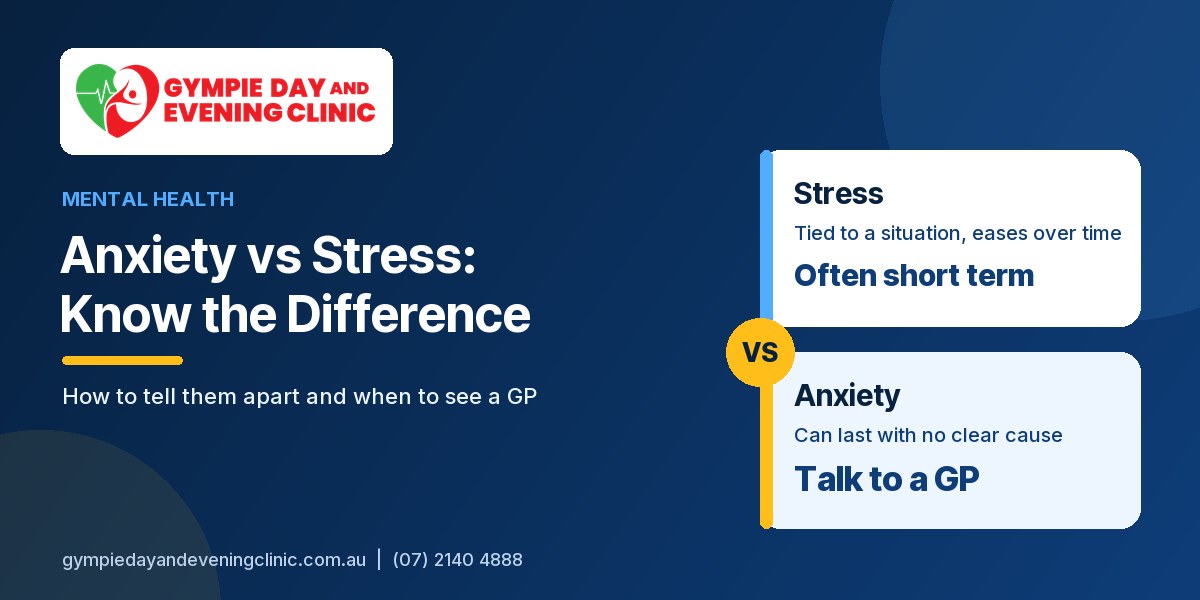
Stress and anxiety feel alike, and many people use the two words to mean the same thing. Both are normal responses to pressure, and both can cause a racing heart, poor sleep, tension in the body and trouble concentrating. The main difference is what sets them off and how long they last. Stress is usually a reaction to something happening now. Anxiety can keep going, even when the situation has passed, or come on with no clear cause.
This guide explains the difference, the signs to watch for and when a GP visit is a good idea. It is general information, not a diagnosis. Our clinic offers mental health support as part of our services in Gympie.
What is stress?
Stress is your body’s response to a demand or threat, such as a deadline, a family problem, money worries or a change at work. It is often short term, and it tends to ease once the pressure is gone. A small amount of stress can help you focus and act. Problems start when the pressure is constant and you do not get time to recover.
What is anxiety?
Anxiety is a feeling of unease, worry or dread. It can follow a stressful event, but it can also happen without any obvious trigger. Beyond Blue describes anxiety as what happens when anxious feelings stick around, have no clear cause and affect daily life. Anxiety is common, and it is treatable.
Stress vs anxiety at a glance
| Feature | Stress | Anxiety |
|---|---|---|
| Usual trigger | A specific situation, such as a deadline or conflict | Can be linked to a situation, or come on with no clear reason |
| Timing | Tends to ease when the pressure goes away | Can continue after the situation has passed |
| Main feeling | Feeling overwhelmed or pressured | Ongoing worry, unease or dread |
| Focus of thoughts | The problem in front of you | Often “what if” thinking about future events |
| Typical body signs | Tension, headaches, tiredness, poor sleep | Racing heart, restlessness, sweating, stomach upset, tension |
| Effect on daily life | Usually temporary | Can affect work, sleep, relationships and everyday tasks |
The physical signs overlap a lot, so the pattern over time is often the most useful clue.
Common signs of anxiety
- constant worry that is hard to switch off
- feeling on edge, restless or unable to relax
- trouble concentrating, or your mind going blank
- irritability and a short temper
- avoiding places, people or tasks because of worry
- racing heart, shortness of breath or chest tightness that comes on without a clear reason
- sleep problems, including trouble falling asleep or waking through the night
Common signs of chronic stress
- feeling tired most days, even after rest
- headaches, muscle tension or jaw clenching
- changes in appetite or digestion
- feeling overwhelmed by small tasks
- relying more on alcohol, caffeine or cigarettes to cope
- withdrawing from friends, family or hobbies
When does stress become a concern?
Stress becomes a concern when it lasts for weeks, affects your sleep or work, or leaves you feeling unable to cope. A useful question is whether the feeling still hangs around after the problem has been dealt with. If the answer is yes, it may be time to talk to someone.
Some people notice physical symptoms first, such as chest pain, dizziness or stomach problems. Your GP will check for physical causes too, such as thyroid problems, low iron or heart problems, before linking symptoms to stress or anxiety.
Simple steps that can help
- Keep a short diary for two weeks, noting when worry or tension peaks and what was happening at the time.
- Move your body. Regular walking or other exercise can ease both stress and anxiety for many people.
- Limit caffeine, alcohol and nicotine, which can make anxious feelings worse.
- Keep a regular sleep routine, and try to wind down an hour before bed.
- Talk to someone you trust, and say what is weighing on you.
When should you see a GP?
Book an appointment if:
- worry or tension lasts for several weeks, or keeps coming back
- your symptoms affect your work, study, sleep or relationships
- you avoid things you used to do because of worry
- you have physical symptoms with no clear cause, such as headaches, back pain or digestive problems
- you are using alcohol or other substances to cope
A GP can talk through what you are feeling, rule out physical causes and discuss options, including counselling and a GP mental health care plan if you are eligible. A care plan can give you access to Medicare rebates for psychology sessions.
Get help now if you have thoughts of harming yourself or ending your life. Call 000 in an emergency. You can also call Lifeline on 13 11 14 or Beyond Blue on 1300 22 4636 at any time.
Anxiety and stress support at Gympie Day and Evening Clinic
Our GPs talk through anxiety, stress and sleep concerns, check for physical causes and explain treatment options. A longer appointment helps if you want to go through what is going on in detail. Appointments run on weekday evenings until 9 pm and on weekends. If you are not sure whether a symptom is linked to stress, you can also read our guide on adult ADHD symptoms, which covers another common cause of worry and restlessness. You can book an appointment online or find out more about our mental health services.
Frequently asked questions
Yes. Ongoing stress can lead to anxiety, especially if the pressure does not ease or you do not have time to recover.
No. Anxiety can happen with no obvious trigger, which is one reason it is worth talking to a GP.
Normal worry comes and goes and does not stop you living your life. Anxiety lasts longer, feels hard to control and affects daily life.
Yes. Racing heart, tension, dizziness and stomach upset are common. A GP will check for other causes first.
Talk to someone you trust, and call Lifeline on 13 11 14 or Beyond Blue on 1300 22 4636 for support at any time. If you feel unsafe, call 000.
Sources: Beyond Blue, Healthdirect, Better Health Channel, Australian Government Department of Health