
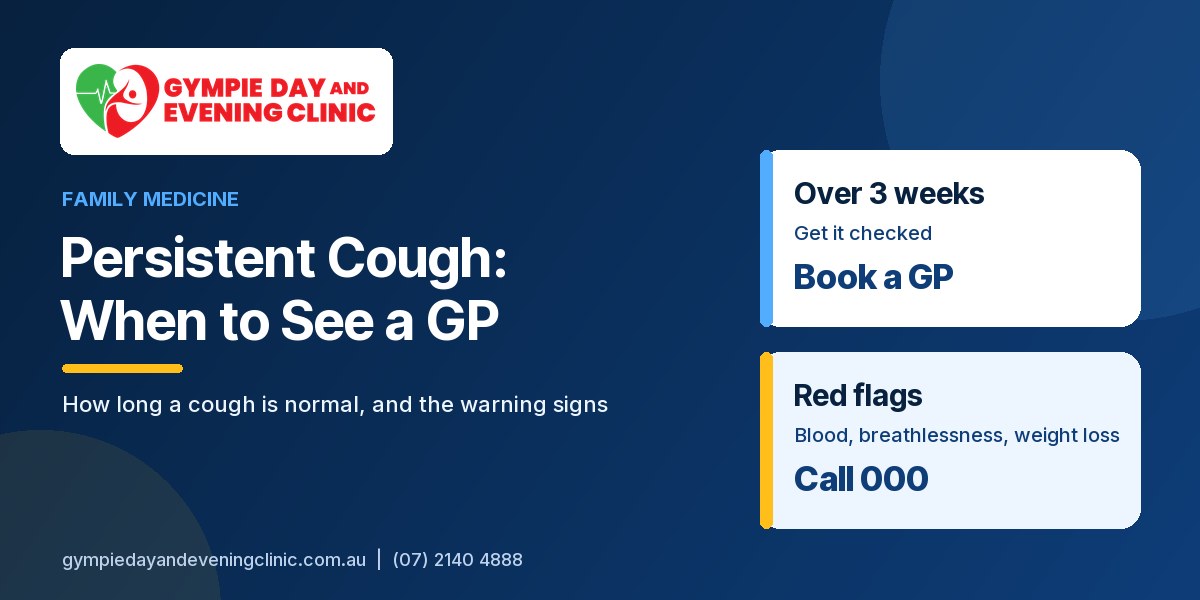
Most coughs are caused by a cold or a chest infection and clear up within three weeks. A cough that lasts longer needs a check, even if you feel well otherwise. Many persistent coughs are caused by asthma, reflux or medicines, and most can be treated once the cause is found. Knowing when to book an appointment, and which warning signs need urgent care, can make a real difference.
Our family GPs see patients of all ages for cough and other ongoing symptoms, and the family medicine service in Gympie includes appointments on weekday evenings and weekends. This guide explains how long a cough is normal, what causes a cough that will not go away and when to get help straight away.
How long is a cough normal?
Doctors describe a cough by how long it has lasted:
| Type | Length | What it usually means |
|---|---|---|
| Acute cough | Less than 3 weeks | Most often a cold, flu or a viral infection |
| Subacute cough | 3 to 8 weeks | A cough that lingers after an infection, often called a post-viral cough |
| Chronic (persistent) cough | More than 8 weeks | Needs a GP check to find the cause |
A cough that is getting better after 3 weeks may only need time. A cough that is not improving, or that comes back, should be checked.
Common causes of a persistent cough
| Cause | What it can feel like | What may help |
|---|---|---|
| Post-viral cough | Dry or chesty cough that follows a cold and fades slowly over weeks | Time, fluids, honey, and treatment of symptoms such as congestion |
| Asthma, including cough-variant asthma | Dry cough, often at night or with exercise, sometimes with wheeze or tightness | A GP assessment and, if needed, a preventer inhaler |
| Reflux (GORD) | Cough after meals or when lying down, a sour taste, or hoarseness | Lifestyle changes and medicine to reduce acid |
| Post-nasal drip or upper airway cough | Tickle in the throat, need to clear the throat, a cough worse in the morning | Treating the nose, sinuses or allergies |
| Blood pressure medicine (ACE inhibitor) | Dry, tickly cough that starts after you begin the medicine | Your GP may change the medicine |
| Smoking or vaping | Regular cough, often worse in the morning, with phlegm | Quitting, and support to do it |
| Chronic bronchitis or COPD | Cough with phlegm, breathlessness on activity, often in people who smoke or have smoked | Lung function tests and a management plan |
| Whooping cough | Long bouts of cough, sometimes ending with a whoop, in people of any age | Antibiotics if caught early. Vaccination protects infants and others. |
Often more than one cause is involved. A GP can work out the most likely reasons from your history and examination.
Warning signs: do not wait
Book a GP appointment promptly if you have a cough that has lasted more than 3 weeks, or that keeps coming back, along with any of these:
- coughing up blood, even a small amount
- weight loss you cannot explain
- night sweats or a fever that comes and goes
- chest pain
- shortness of breath, or breathlessness on mild activity
- wheezing that is new or getting worse
- swollen ankles or a cough that wakes you up most nights
- a cough in someone who has smoked for many years
Call 000 or go to the emergency department if you have severe breathlessness, blue lips, chest pain with sweating or fainting, or you cannot speak in full sentences.
What happens at a GP visit for a persistent cough?
Your GP will usually:
- Ask how long you have been coughing, what it is like, and whether anything makes it better or worse.
- Ask about smoking, medicines (especially blood pressure tablets), allergies, reflux and any recent travel or contact with people who have a long cough.
- Examine your chest and throat, and check your breathing and oxygen levels.
- Decide whether to arrange tests. These can include a chest X-ray, a lung function test (spirometry), blood tests or a trial of medicine.
Often the cause can be found with a single appointment and a short treatment trial. If it is not clear, your GP may refer you to a specialist.
Cough treatments that help
Treatment depends on the cause. Some general steps help while you find out what is going on:
- Drink fluids to keep the throat moist.
- Avoid smoke and strong fumes, and do not smoke or vape around the cough.
- Use honey for adults and children over 1 year old, to ease a tickly cough.
- Do not use cough medicines for children under 6 years without advice from a doctor or pharmacist.
- Do not stop prescribed medicines without talking to your GP.
Over-the-counter cough medicines can help symptoms, but they do not treat the cause. Check with your pharmacist if you take other medicines.
Staying well and preventing coughs
- Get your vaccines up to date, including the flu vaccine each year and the whooping cough vaccine during pregnancy or in early childhood. See our guide to immunisations.
- Wash your hands and cover coughs and sneezes.
- Quit smoking if you smoke. Support is free through Quitline (13 78 48).
- Manage reflux and allergies with help from your GP.
Cough care at Gympie Day and Evening Clinic
Our GPs assess persistent coughs in person or by telehealth when that is suitable. Appointments run on weekday evenings until 9 pm and on weekends. We bulk bill eligible Medicare card holders for standard GP consultations, and on-site pathology means some blood tests can be taken during the same visit. You can book an appointment online or call (07) 2140 4888.
Frequently asked questions
If a cough has lasted more than 3 weeks, or is not getting better, book a GP appointment. Seek urgent care for the warning signs above.
After a cold, a cough can linger for several weeks. Other common causes include asthma, reflux, post-nasal drip and some blood pressure medicines.
Sometimes. That is why a cough lasting more than 3 weeks should be checked, especially with weight loss, coughing blood or breathlessness.
Often yes, for a first assessment, although a GP may ask you to come in for an examination or tests.
Cough medicine is not recommended for children under 6. Honey can help children over 1 year old. Ask your GP or pharmacist for advice.
Sources: Lung Foundation Australia, Asthma Australia, Healthdirect, Quitline, Australian Government Department of Health